Monthly Archives: April 2026

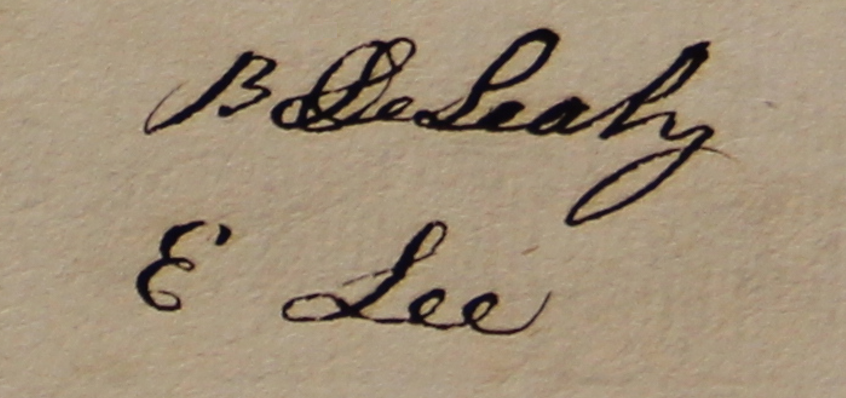
The mysterious Deleahy and Lee

I have noted more than once on this blog that, despite having spent so many years trying to understand Macintosh’s world, there are some elements that remain stubbornly obscure. One such is the identity and role of two women who formed part of Macintosh’s household throughout his time in Avignon and later exile in Switzerland: B. Deleahy and E. Lee. I have long known that these women existed (their names appear often on receipts and invoices, for example), and I was aware that as I grew closer to writing about Macintosh’s time in Avignon I would eventually have to try to figure out who they were and what they were doing in his life.

Both women first appear in Macintosh’s archive in 1782, when they were living in Liège and had assumed—at least in the case of Deleahy—the role of guardian for Macintosh’s youngest daughter, Polly, during an 18-month stay on the Continent. How Macintosh had come to meet these women is currently unclear, as is almost everything else about them.

Following a lead I found in the 1935 book L‘Émigration Francaise dans le Canton de Fribourg (1789–1798), I was able to locate Deleahy and Lee in the Archives de l’Etat de Fribourg, where they appear (alongside Macintosh) in the Rathsmanual of the canton’s Petit Conseil—recent émigrés from France. The entry is extremely revealing; it gives the women’s first names (Bridget and Elizabeth, respectively), their religion (Catholic), and their place of birth (London).
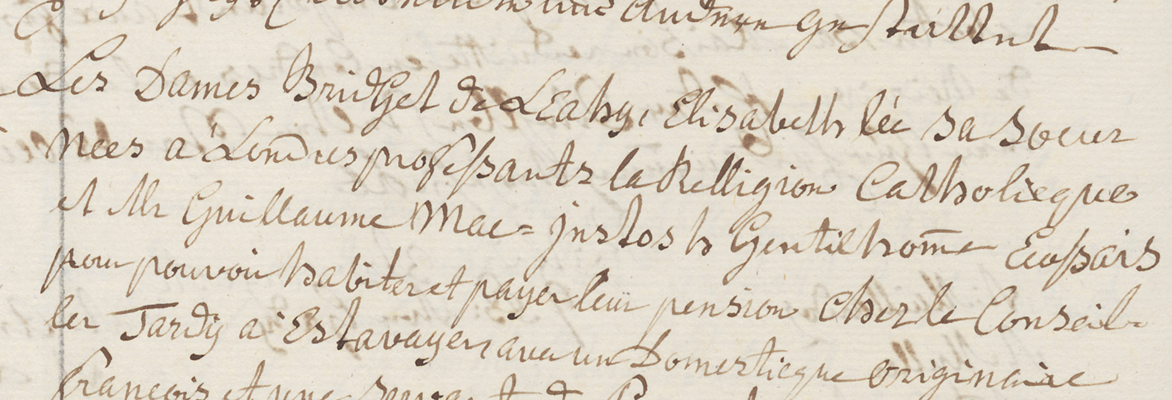
Extract from the Manuaux du Petit Conseil de Fribourg for 3 August 1792. Archives de l’Etat de Fribourg, CH AEF RM 343 (année 1792), f. 410.

The entry in the Rathsmanual concerns the sisters’ request to take up lodgings with Macintosh and their two servants in Estavayer, on the southern shore of Lake Neuchâtel. The Petit Conseil approved their request, but vetoed one of the servants, who was French. At this time there was a widespread concern that working-class French citizens posed a risk of spreading revolutionary sentiments in Switzerland.

Having Bridget and Elizabeth’s names is a helpful starting point, but there is a great deal more digging to do. I have found a reference to them both in a biography of the German novelist Sophie von La Roche that appears to connect them to the Catholic community of Frankfurt. I can see a new rabbit hole ahead…

The beginning of the end, and other wishful thoughts

Today marks this blog’s 14th birthday. A great deal has happened since my first post in 2012, when I was just beginning to figure out who William Macintosh was and how interesting (and challenging) it might be to piece together the story of his life. Thanks to the largess of the British Academy, I have been working full time on my book since the beginning of September and have managed to make the kind of progress that I know would almost certainly be impossible under other circumstances. As ever, however, there is still a long way to go, but I am beginning to sense a glimmer of light at the end of the tunnel (or at least the tunnel that leads to a first complete draft of my book; there will doubtless be another long tunnel that leads to a revised and shortened version suitable to submit to the press!).

I have recently begun work on the book’s tenth chapter, which follows a decade in Macintosh’s life from financial failure in London in 1783, through personal reinvention as a gentleman farmer in the rural hinterland of Avignon and the tragic suicide of his son, to the advent of the French Revolution and the eventual seizure of his property as a bien national. I am looking forward (albeit trepidatiously) to tackling this chapter, since it concerns the period of Macintosh’s life that is currently the most obscure to me. Part of the mystery derives from the fact that most of the archival sources are (understandably) written in French and therefore take me much longer to process and make sense of than English-language sources.

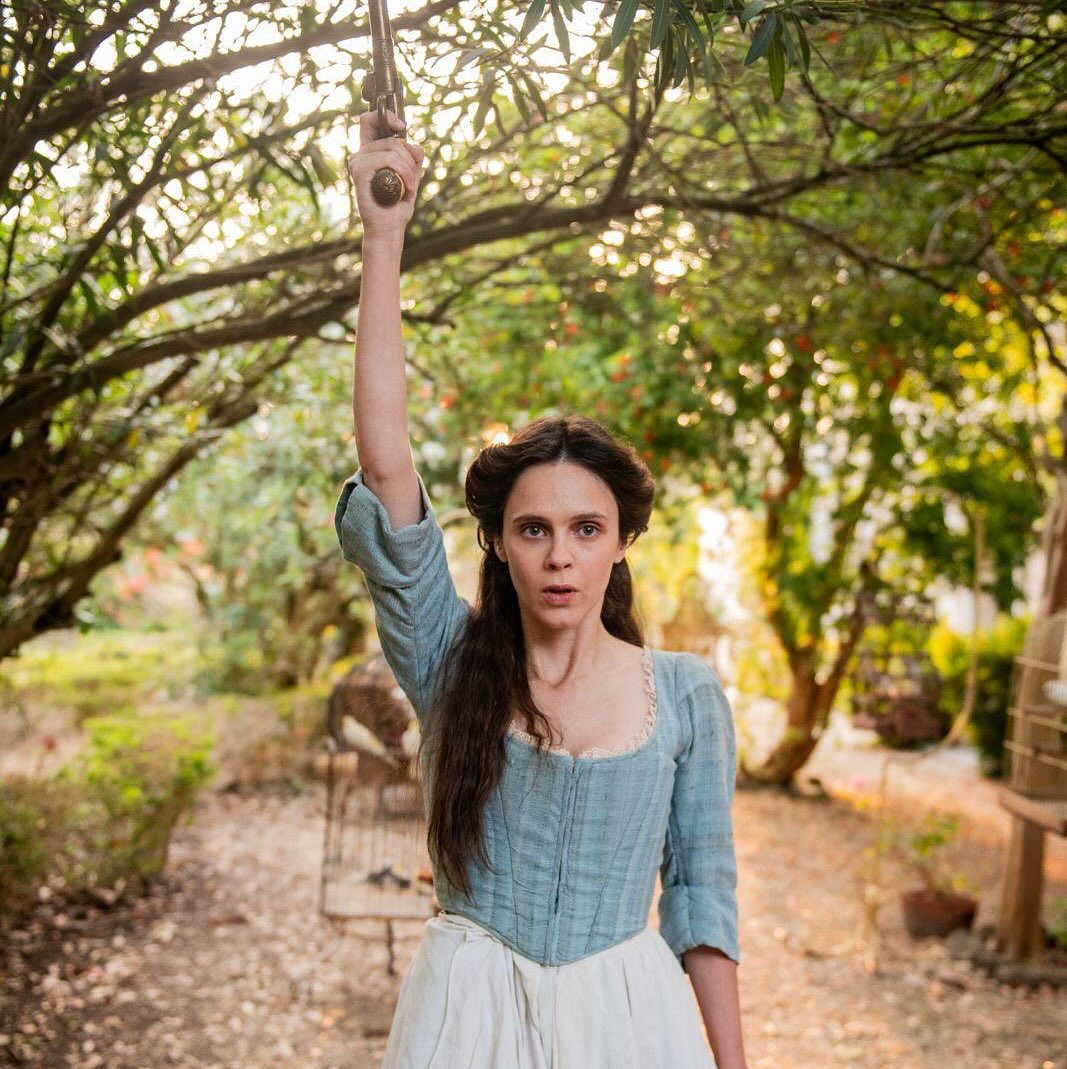
One episode of Macintosh’s time in France that I am particularly looking forward to unravelling is his friendship with Leonor de Almeida Portugal, the poet and painter whom Macintosh knew as the Countess Oyenhausen. Leonor, Marquesa de Alorna, led a fascinating life that rivals Macintosh for interest and intrigue. Indeed, so compelling is her story that it will be coming to Netflix later this year as a six-part Portuguese-language biographical series made by Ukbar Filmes and RTP, with Sara Matos in the lead role.

Sara Matos as Leonor de Almeida Portugal. © Ukbar Filmes.

Looking ahead to next year and this blog’s fifteenth birthday, I should by then have submitted the book manuscript and will be waiting (again with trepidation) for the arrival of the reviewers’ reports. Perhaps then I can start writing the script for the six-part Netflix series!