
For much of the spring, I have been working to understand the social networks that defined Macintosh’s time in Avignon between the mid-1780s and early 1790s. While I have been able to trace many of the individuals whose names appear in his archive, and to understand something of their relationships with Macintosh, there are many whose presence remains obscure (at least to me). For a long time, one such figure was a child, Joseph, who appears in Macintosh’s archive in relation to his death, at the age of two, in 1788. Try as I might, I could not work out why Macintosh had documents relating to Joseph’s death—an invoice of expenses associated with the burial, and a certified extract from the parish register. Sometimes, however, all that is needed is one piece of information for everything suddenly to make sense.
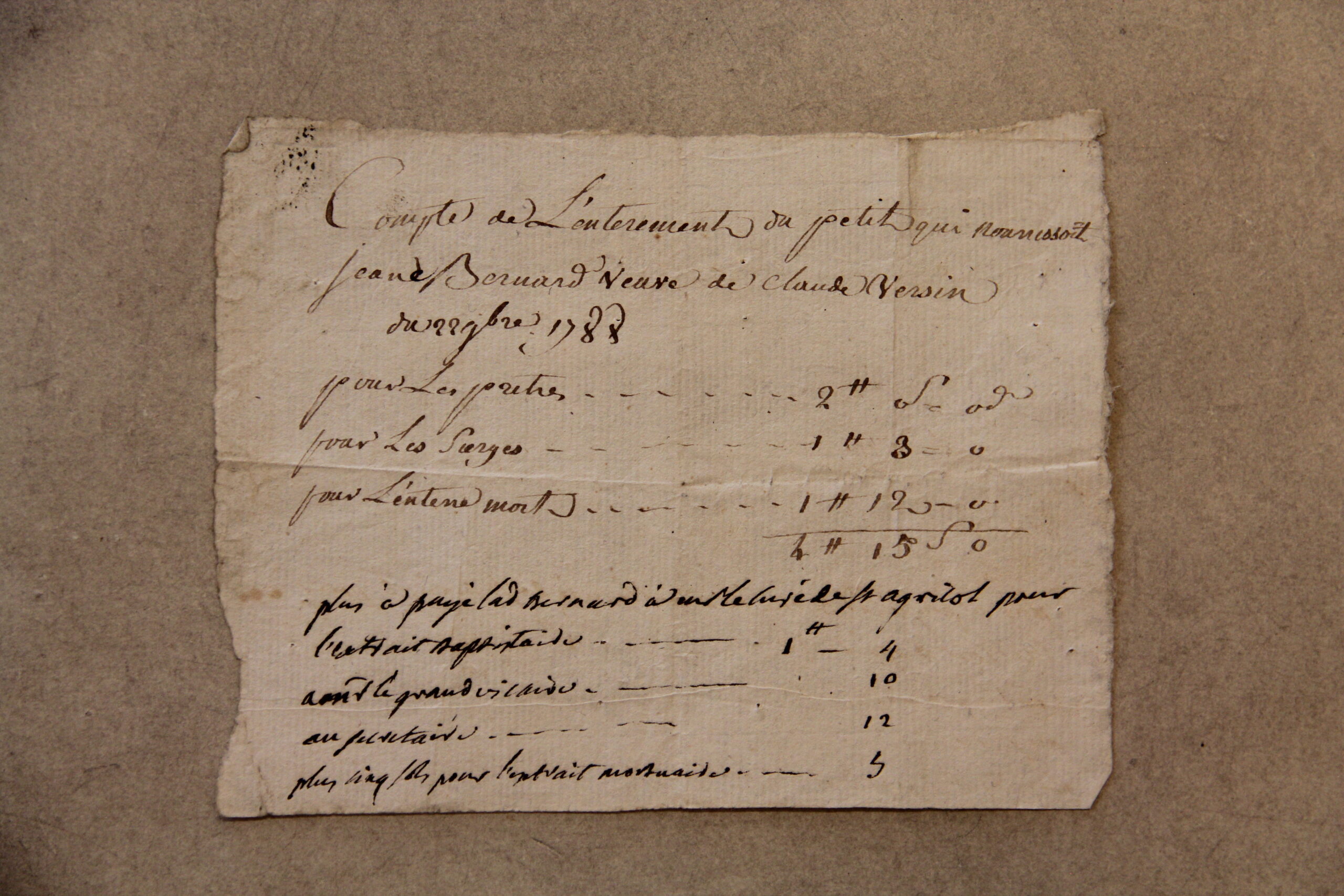
The documents in Macintosh’s archive make it clear that Joseph was about twenty-six months old when he died at the home of his wet nurse, Jeanne Bernard, on 22 November 1788. He was buried the following day in Barbentane, to the southwest of Avignon. The funeral expenses included 2 livres, 5 sols for the priest (Esprit Joubert), 1 livre, 3 sols for candles, and 1 livre, 12 sols for the interment itself.
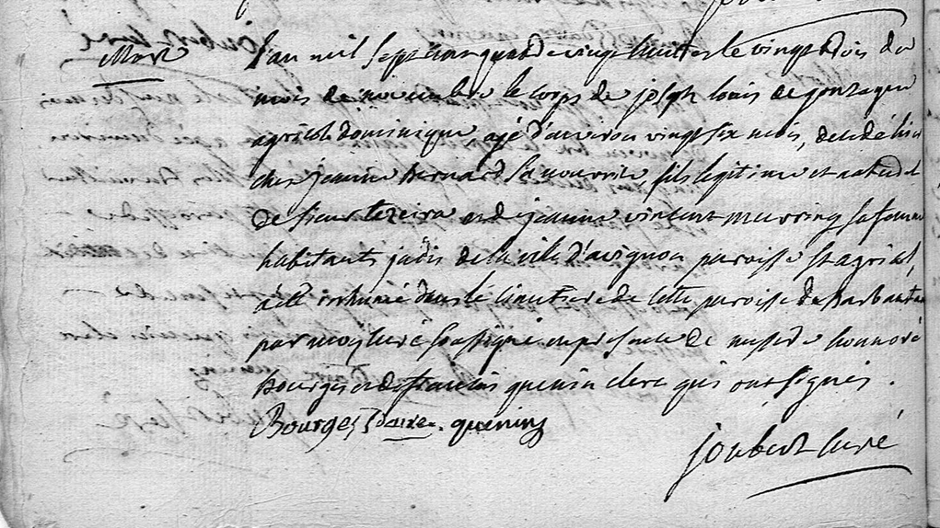
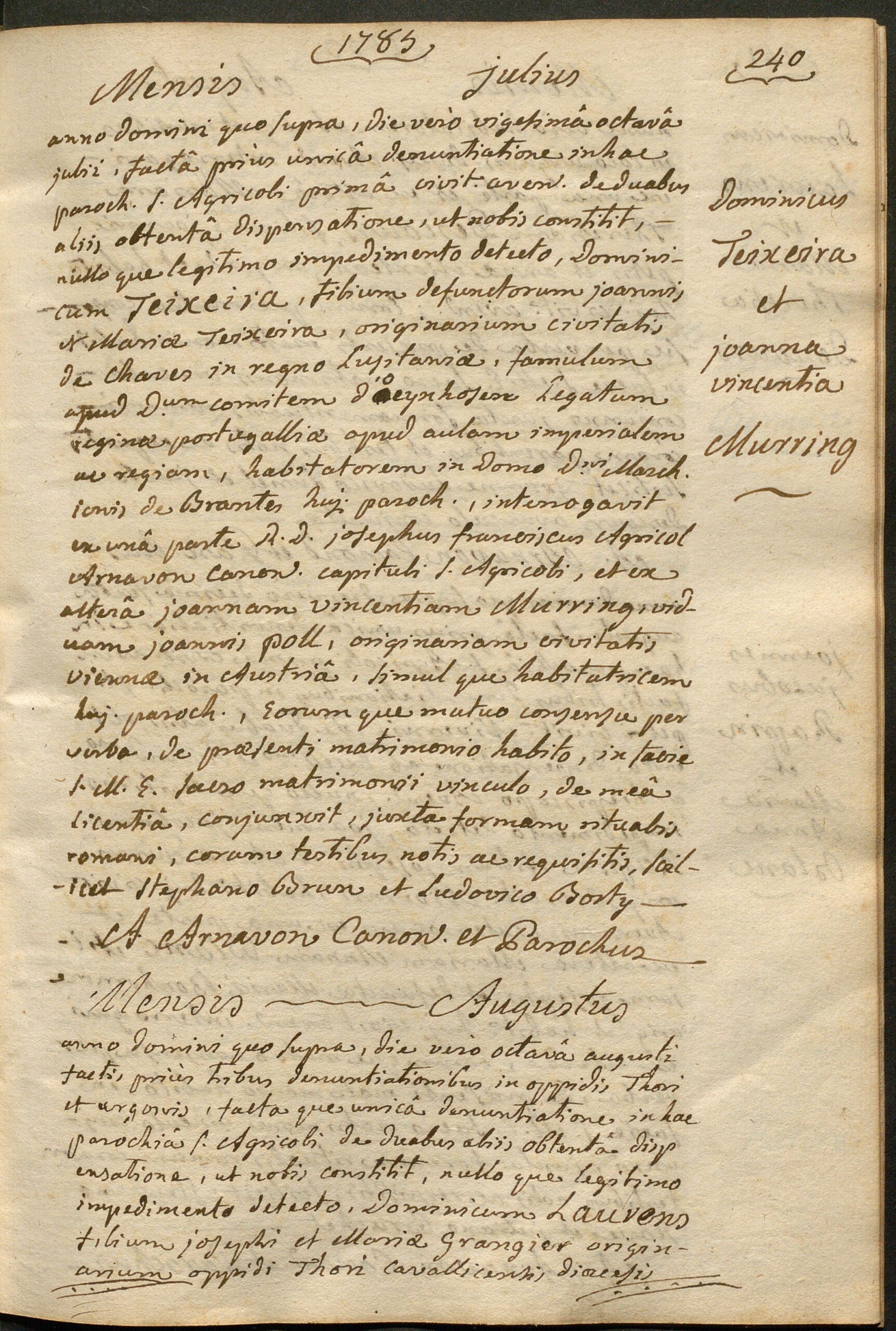
Joseph’s parents were recorded in the burial register as “le Sieur Teixeira” and “Jeanne Vincent Murring,” described as former residents of the central parish of Saint-Agricol in Avignon. Try as I might, I could not work out the connection with Macintosh until I consulted the couple’s marriage act. They had married in Avignon in the summer of 1785, and the act revealed that Teixeira was from Portugal and Murring from Vienna, and that the former was in the service of the Count of Oyenhausen-Grevenburg. Finally, I had the connection.
In 1788, Macintosh was looking after two of the Count’s children at his home outside Avignon while the Count and Countess were in Portugal. It seems likely that Teixeira and Murring had gone with them, leaving Joseph in the care of a wet nurse in Barbentane. Joseph’s death—which would have been a devastating blow to his parents on their return to Avignon—would have required Macintosh to step in and cover the expenses in the meantime. At the same time, the Count and Countess’s youngest child, Henriqueta, was being cared for by another wet nurse at Macintosh’s home.
While this story may end up as a footnote to a footnote, I find it impossible not to be fascinated by these connections, obligations, and unconsidered lives. If Macintosh deserves to be remembered, then so too does Joseph.