
A guest blog post by Dr Emily Hayes, Oxford Brookes University.

Unlike Innes, I do not know William Macintosh intimately. Because of this, I have asked myself whether the French word rastaquouère fitted Macintosh. The term, possibly of South American origin, as Marina Warner shows, designates a flashy, or somewhat dubiously engaged, foreigner. Yet this word tells us more about the perceptions of the beholder and which are projected onto the beholden.
Certain forms of historical source are deemed to be more insightful into aspects of a life than others. Much of the Macintosh archive records its author’s own attentiveness to his material surroundings. Amidst bills for building works, foods and wine, a few words in English stand out in a letter dated 1785 about his ‘knowledge of mankind in all the stages of society, from the most savage state of nature to the highest state of civilization’, casting sudden, and what is to me a very alien, light on his outlook on to the world.
Resolving the familiar and the distant is the paradox of historical geography. Why Macintosh settled in Provence is currently unknown. The Avignon archive positions him within a network of other British and foreign expatriates in the region; people in Marseille who kept tabs on the travellers putting into Marseille to wait for favourable weather, coming and going by ship, on their ways east, north or west. Macintosh therefore exemplifies a greater historical geographical phenomenon: of people, some expatriates who, at different speeds, transited this region.
Provence has been a refuge for restless cosmopolitans for centuries. Global lives that were precluded from going home, some of their volition, others in exile or idealists and visionaries seeking an alternative home. Theirs were lives that were neither here, nor there. In reflecting upon such experiences of displacement, this last post brings together several figures connected to the region and adjacent ones.
How can historians ever imagine to have a handle on past lives, when even the people closest to us, and even our own changeable motivations, are so difficult to fathom? As a child, I puzzled over my parents’ new fascination with Robert Louis Stevenson’s Travels with a Donkey in the Cévennes (1789). Today, Stevenson’s account of his journey on foot with his equine companion, Modestine, and dealings with locals, across a region just north west of Avignon, delights. In his own words, Stevenson was just “a traveller, hurrying by like a person from another planet” (p. 27). However, a number of other Scottish expatriates established longer, and more intimate, local connections.
“…both wise and fools / Wrote books, heady as wines!” A line from a poem by the Scottish natural scientist, sociologist, town planner and educationalist, Patrick Geddes which recalls Macintosh’s own inclinations. Geddes has repeatedly cropped up in my research and his resonance on turn-of-the-twentieth-century British Geography was far more pervasive than has hitherto been discerned. An international phenomenon towards whom my own inquiries have all too slowly inched, Geddes’ is a light that draws. He is best known for designing the ingenious Outlook Tower in Edinburgh. In 1924, in Montpellier—in what is now the region of Occitanie to the south west of Avignon—and building on centuries old Franco-Scottish camaraderie and transnational cooperation (established in opposition to England and the English), Geddes founded the Collège des Écossais (the Scots College). On one of the buildings there, as well as at Edinburgh’s Riddles Court, the inscription Vivendo discimus, “By living, we learn”, can be found.
The renovations and purchases of furnishings detailed in Macintosh’s papers show the extent to which he made a home for himself and his household employees in Provence. Such attentiveness to surroundings and to practicalities as well as comfort, suggests long-term settlement. But whilst Macintosh’s material life can be gleaned, the workings of his mind and motivations remain elusive. In contrast, just north of Avignon, in the Vaucluse département, Glasgow-born Kenneth White also attempted to renovate a dilapidated residence. Letters from Gourgounel (1966), named after his half-ruined property, is as much about an encounter as with place as a journey within. An interdisciplinary thinker and proponent of the terms géopoétiques and intellectual nomadism, it is France and French thought, rather than, the UK or Anglophone literature, that has allocated White a place. Macintosh’s days in Province ended as the French Revolution took effect in the region and he went into exile, first in Switzerland and then in Germany. For the fortunate, the habit and means of travel can imbue the freedom of physical as much as intellectual movement. The multiple marriages and career of Elizabeth von Arnim, an Australian-born proto-feminist crossed both the British and German Empires. Von Armin’s disregard for the restrictions of convention is pervasive throughout her now Virago-published novels, Elizabeth and Her German Garden (1898), The Caravaners (1909), and All The Dogs of My Life (1936). The latter, especially, captures her sojourn in Mougins, the oscillations of her heart and the vicissitudes of turn-of-the-century women’s transnational lives with vim and bite.
BF329.
The gastronomic and oenophile tastes of Macintosh would have delighted another local transnational, the German-born writer and food and wine amateur, Sybille Bedford. After a childhood shuttling across Europe, the most physically, if not emotionally, settled periods of her teenage years were in Sanary-sur-Mer, a small port south east of Avignon on the Mediterranean coast. To the extent that she could be, she was anchored there. Her Italian stepfather set up an interior design company servicing the needs of a community of expatriates and second home owners. Aldous Huxley became a father figure to her. As World War Two turned from prospect to actuality, the region harboured a wave of immigrants from Germany and central Europe, including dissident authors such as Thomas Mann. With her Jewish ancestry, Bedford too became a refugee forced to relocate to the US. A Compass Error (1968), and other semi-autobiographical narratives about her family and social circles, shows that open-mindedness and multiculturalism are not necessarily tethered. For all her cosmopolitanism, her intellectual immersion, her non-conforming loves, she expressed what today registers as an all too pedestrian snobbery.
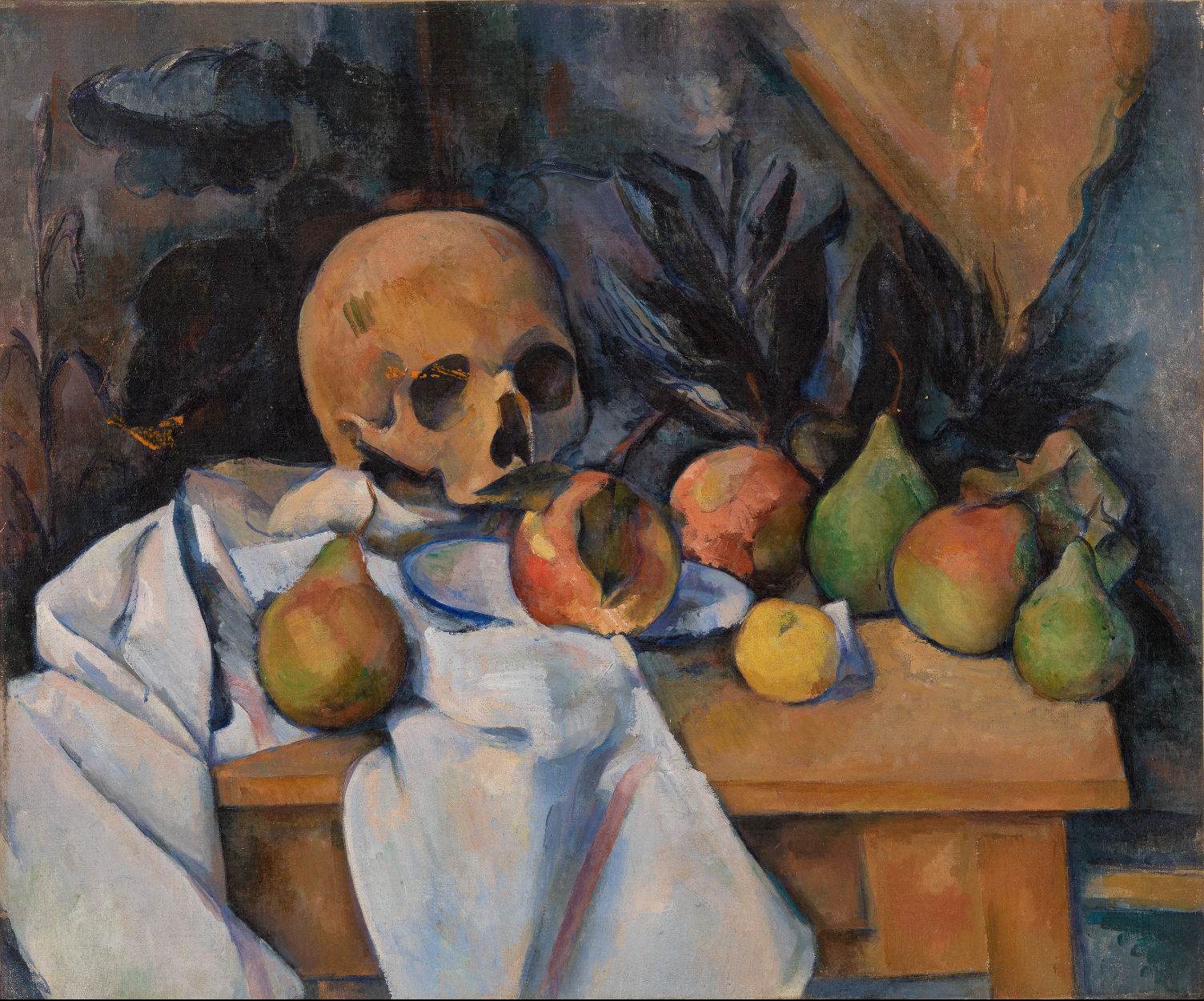
Nature morte is French for the English “still life”. Each term suggests quite different processes. Whichever way you read it, the former’s emphasis on death is morbid, whilst the latter conveys a sense of contemplation of a mystery. As historical geographers, we image and contour the proportions of phenomena human and non-human. We fathom, reckon and triangulate off coordinates that we think that we know, our need for certainty side-lining the weakness of resolution of our approximate and provisional quality of understanding to which artists and art historians are more acutely sensitised. In researching, we travel, explore and investigate so as to capture what can only ever be a spatially and temporally particular view of the variegated lights of past lives, including our own.
The lives of Macintosh and the latter-day transnationals (and including Jonathan Meades who, though not discussed here, shares with Macintosh and the others interests in architecture and food) were not still. Yet still they mystify and give life.
Cosmopolitan drift was often as much topographical as it was social. If you have lived abroad you will know that, as an expatriate, hierarchies of class, wealth, status and profession are shaken up. Abroad, one might become a big fish in a small pond, the opposite of the position occupied in one’s notional homeland. Macintosh’s papers show that his acquaintances crossed through the social spectrum of locals and a community of aristocratic circles. The transcending of the hierarchies of class and status, and other projected categories, was afforded to these, ultimately, everyday figures who are no more or less interesting, or significant, than any others. Fusion and confusion as they attempted to integrate and account for the shifting sums of their being, and accrual of experiences, across sliding scales of time and space, was their lot.
The social constituency (my thanks to Simon Naylor for teaching me that term) of travellers, as the Belgium-born and later French naturalised anthropologist Claude Lévi-Strauss knew, was only distinguished by degrees of temporal and spatial exposure, from that of explorers and, by extension, ethnographers and expatriates. Aspects of the aforementioned figures evidence that neither lifestyle (whether imposed or chosen) dictates or guarantees anything much in particular. Neither humanity, nor humility, nor open-mindedness, nor local or global concerns are automatically derived from transnationalism, nor from any other form of inherited, imposed or self-ascribed identity, or given place, education, politics or profession. And conversely, neither does staying, nor rootedness engender kindness, empathy or the investment in a locale. We choose how we perceive, think, and act in, the world and are educated and enculturated into doing so. This is not yet a global privilege or right. The precise impact of Provence and the extent of Macintosh’s inward travel there are, as yet, undiscerned. Although places, composed of people, draw us as much as we draw them, the lights that we bring transform the quality, scale and colour of our perceptions and the accents placed in our attempts to portray them. Through different materials we journey, explore, investigate and, depending on how you define home, locate and expatriate, ourselves and others. The motions of the inner compasses that guide and measure puzzle. If referents are not common then everything becomes historical geography.