Author Archives: Innes Keighren

About Innes Keighren

Professor of Historical Geography at Royal Holloway, University of London.

How Glasgow flourished

How Glasgow Flourished

I am grateful to Deirdre Grieve for alerting me to a new exhibition at the Kelvingrove Art Gallery and Museum, “How Glasgow Flourished, 1714–1837“, which examines that city’s financial success during the Georgian era.

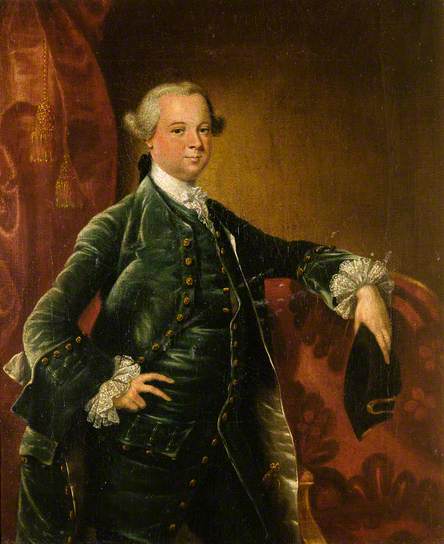
The exhibition, which runs until 17 August, includes a number of references to William Macintosh’s successful industrialist brother, George. Having not seen the oil painting  of George in the flesh (as it were), I hope to be able to visit the exhibition during its current run.

Educating Master Macintosh

Bill for the schooling of Master Macintosh.

Bill for the schooling of Master Macintosh (1772). Archives départementales de Vaucluse, 2 E Titres de famille 83, “John Townson / 1768″.

Macintosh was, for much of their early lives, geographically remote from his children: a daughter and at least one son. Although Macintosh’s daughter survived to adulthood and was married, I know very little about his son (indeed, whether there was more than one). Master Macintosh (assuming there was only one) was not referred to in his father’s will, which indicates, sadly, that he was no longer alive at the point at which the will was drafted.

It is clear, however, that Macintosh cared very greatly about the education of his son and paid rather handsomely for it. Macintosh had placed his son under the “tender & conscientious care & guardianship of men of virtue, friendship, & liberality of sentiment” in Britain, in the hope that Master Macintosh might have a stable upbringing and an effective education. Macintosh set out (in a letter to his son from Madras in 1779) his views as to a correct education for a child of his station. They are worth quoting at length:

A knowledge of the Latin is indispensably necessary to give you a true idea of your nature tongue, besides that it is a language universally understood in Europe, although not practiced in conversation. If you were younger (than 11 years) I would wish you to know the rudiments of Greek, because many scientific terms & words of our own language are derived from it; but I despair at this. Every gentleman ought to understand orthography, unexceptionally. To {indecipherable} & distinctly. All the common rules of arithmetic. Book-keeping as practiced by merchants, with double entry. The principles of mathematics. Geography. A just idea of astronomy. The principles of laws. And ancient and modern histories. Indeed, a man of business, cannot be competent without them; otherwise, buy acting without, any fixed principle, he will be continually exposed to errors & impositions, & success can only be the effect of chance. And without them a man in public station, while each successive measure betrays ignorance which will justly expose him to ridicule & contempt, may be misled in that degree that, the security, or at least the prosperity, of the stake may be sapped & endangered. Dancing & fencing are not only graceful, but useful accomplishments; the one enables a man to be at his ease in company, & the other may secure him from insults. Riding, according to rule, has its utility & gracefulness also. It is not possible to convey all the advantages resulting from these qualifications, through the several stages of life, in the circumscribed compass of a letter. I deliver you the texts, & leave the expositions to friends, & to your own heart. Let the latter be your universal monitor.

Macintosh’s habit of keeping detailed financial accounts, as well as invoices and receipts, means that we have some sense about what it cost to educate Master Macintosh. A bill dated July 1772 (above) sets out the principal costs associated with Master Macintosh’s schooling. These included:

  • “6 Months board and Instruction” at £10;
  • “Board in the Christmas Vacation” at £1 12s.;
  • “a Hatt [sic]” at 2s. 9d.;
  • “Cutting of Hair & Cleaning of Shoes” at 2s.;
  • and “a Spelling Book” at 10d.

Instruction, and the necessities of life, amounted to £15 14s. 6d. for six months.

Macintosh’s concern for his son, and for his education, is evident and touching. His letter from Madras (which runs to more than twenty pages and offers his son a series of life lessons) is both fascinating and deeply moving. My principal task for the summer will be to recommence the systematic transcription of the archival material I was able to photograph in Avignon in 2012, paying particular attention, in the first instance, to the materials relating to Macintosh’s time in the Caribbean.

Macintosh and the Grenadian pamphlet war

Audi alteram partem (1770)

Audi alteram partem (1770). From the pen of Macintosh?

I have been reading, with great interest, a recently-published article in The Journal of Imperial and Commonwealth History by a graduate student (Aaron Willis) at the University of Notre Dame: “The standing of new subjects: Grenada and the Protestant constitution after the Treaty of Paris (1763)“.

Willis’s paper concerns the political difficulties which surrounded the incorporation of French Catholics into the British Empire following the ceding of Grenada at the end of the Seven Years’ War. In broad terms, opinion was divided among islanders as to the extent to which political rights which applied to British Protestants should be extended to French Catholics. These divisions resulted in political stalemate which lasted through much of the late 1760s and early 1770s. Willis offers a neat summary of the principal pamphlets which were issued during this period and argued, at turns, for and against the rights of French Catholics.

There is some evidence to suggest that one of these pamphlets—Audi alteram partem (1770)—which Willis describes as being “[t]he most sustained defence of Catholic rights” was co-authored by Macintosh. That, at least, was the opinion of an anonymous reviewer writing in The Political Register (May, 1770) who noted “It is almost needless to add, that Mr. Mackintosh [sic], Col. [James] Johnstone, and Mr. Scott are the Authors of Audi Alteram Partem…and are the agents and abettors of the Romish party there”. Clearly it will require some digging to determine whether or not there is any validity in this claim, or that Macintosh was “known to be zealous in the cause of the Roman Catholic French subjects at Grenada”. I would think, however, the latter is a safe bet.

Taking account

Mastering the Niger

Lambert, David. Mastering the Niger: James MacQueen’s African geography and the struggle over Atlantic slavery. Chicago: University of Chicago Press, 2013.

I have very much been enjoying David Lambert‘s new monograph, Mastering the Niger, which was published late last year by the University of Chicago Press. David’s book concerns a number of themes, including the production of geographical knowledge, the role of observation and testimony in the making of geographical fact, and the production and evaluation of credibility. His biographical focus is on the Scots Caribbean planter turned Glasgow merchant and businessman, James MacQueen (1778–1870).

Although Macintosh was born a generation earlier than MacQueen, there are a number of interesting parallels between their lives. Both were part of the wave of Scots who took the opportunities afforded by the Act of Union in 1707 to forge their careers in the British Empire; both were planters in Grenada; both had important dealings with Sir William Pulteney (1729–1805); both were skilled and enthusiastic proponents of double-entry bookkeeping. In Macintosh’s case, he had had, from the age of 18, “the highest charge of money, papers, & books of accounts”.

In Mastering the Niger, David offers a fascinating discussion about the parallels between double-entry bookkeeping and processes of geographical inscription and abstraction (see Chapter 3) and between the notion of “balance” and MacQueen’s own ideas about the nature and direction of the British imperial project. The analogy is an exciting and interesting one, not least because it so well captures William Macintosh’s own practices and perspectives in relation to these matters.

As I have mentioned previously, Macintosh was a thorough and committed record keeper (particularly so in relation to financial matters). This concern was not limited to his personal finances, but to those of Grenada, India, and the British Empire more widely. The day-to-day practices of taking account were so significant to Macintosh that he prescribed them in a letter to his son, in which he laid out what he considered the indispensable skills for his son’s life: “I would wish you to know…[a]ll the common rules of arithmetic. Book-keeping as practiced by merchants, with double entry. The principles of mathematics. Geography. A just idea of astronomy. The principles of laws. And ancient and modern histories. Indeed, a man of business, cannot be competent without them”.

Macintosh’s commitment to accounting means that we have a reasonably good insight into his own financial standing at various points in his life. For instance, in 1775 he applied to the Dutch bank Hope and Company (founded by Scots) for a loan of £20,000, and, in so doing, set out his financial position at that point. His collateral, detailed below, was calculated at more than £45,500, comprising plantations (or shares of them), various mortgages and bonds, a number of slaves, his house, and his annual salary of £300 for his role as Comptroller of His Majesty’s Customs for the Port of Grenville in Grenada.

Macintosh's collateral in 1775

Statement of Macintosh’s collateral in 1775. Archives départementales de Vaucluse, 2 E Titres de famille 84, “Charles Wilson / et autres de Grenade / 1767–1776”. Macintosh to Hope and Co. 15 December 1775.

Ex libris under the Californian sun

My fellow HGRG committee member Natalie Cox is currently undertaking a research fellowship at the Huntington Library in California. Natalie was kind enough to call up the Huntington’s copies of Travels in Europe, Asia, and Africa to check for indicators of provenance. Both copies of the book contain what appear to be contemporary bookplates, although I will need to dig a little deeper to attribute them properly.

Unidentified Ex Libris

Unidentified Ex Libris. The Huntington Library, call number 355653.

The bookplate in call number 355653 is listed in the University of Illinois at Urbana-Champaign’s John Starr Stewart Ex Libris Collection, but does not contain an attribution.

John Coore's Ex Libris

John Coore’s Ex Libris. The Huntington Library, call number 357106.

Although the bookplate pasted into call number 357106 makes quite clear that the book belonged to one John Coore, it is not immediately apparent which John Coore this is. One possibility (assuming he was a contemporary owner of the book) is that he is the John Coore who built Ivy House in Golders Hill, where Anna Pavlova (the famous ballerina) later lived. Clearly more digging will have to be done to separate conjecture from likelihood.

Meeting the descendants

Deirdre Grieve at Glasgow Cathedral

Deirdre Grieve at Glasgow Cathedral.

I was fortunate today to meet up in Glasgow with the great, great, great, great grandniece of William Macintosh, Deirdre Grieve, and her son Dorian. Deirdre has for some time been interested in William Macintosh, from whose sister she is descended, and has done some fantastic genealogical research. Deirdre, Dorian, and I were able to share some snippets and stories before visiting the grave of William’s brother, George, and George’s son Charles (the eponymous inventor of the Macintosh waterproofing process), in the grounds of Glasgow Cathedral.

George Macintosh (1739–1807). Glasgow Museums.

George Macintosh (1739–1807). Glasgow Museums.

George Macintosh was a successful industrialist who owned a large cudbear dying works in Glasgow, which operated for more than three quarters of a century from the 1770s. George and his wife, Mary (née Moore), are commemorated on their son’s gravestone. The inscription reads

Here is interred,
Charles Macintosh.
Of
Campsie, and Dunchattan.
And Fellow of the
Royal Society of London.
Son of George Macintosh,
and Mary Moore,
both also here interred,
and the great grandson
of the last Provost
John Anderson of Douhill.
Born 1766. Died, 1843.

Deirdre’s neighbour, who joined us later to chat about William Macintosh, is Nigel Leask, Regius Chair of English Language and Literature at the University of Glasgow.

Macintosh and George Cuvier

Georges Cuvier (1769–1832)

Georges Cuvier (1769–1832).

For historians of science, the French naturalist George Cuvier has an almost totemic significance: straddling the eighteenth and nineteenth centuries like a scientific Colossus of Rhodes. It was particularly interesting, therefore, to discover on Monday that Cuvier owned a copy of Macintosh’s Travels (in its second Paris edition, 1788). It seems rather unlikely that Cuvier purchased his copy at the time of its publication—he was then nineteen, and working as a private tutor in Normandy. A more intriguing possibility is that he acquired the book at some point after his arrival in Paris in 1796, a circumstance which would indicate that Macintosh’s book retained value and currency more than a decade after its initial French publication. All of this will remain speculation, of course, until I can examine Cuvier’s copy of Travels which is housed at the Bibliothèque Centrale du Muséum nation d’Histoire in Paris.

Ownership and readership?

I spent part of yesterday morning in the Dr Seng T Lee Centre for Manuscript and Book Studies at Senate House, consulting the useful collection of sale catalogue facsimiles in the multi-volume Sale catalogues of libraries of eminent persons (1973). In order to understand the circulation and likely influence of Macintosh’s book, it is necessary to reconstruct (as far as is possible) the book’s ownership and readership. 19th-century sales catalogues are a useful first step in determining who owned a copy of Travels in Europe, Asia, and Africa (although not, necessarily, who read it). Such catalogues are one means by which to select those individuals who warrant further attention.

Edmund Burke

Edmund Burke (1729–1797), the enthusiastic antagonist of Warren Hastings. National Portrait Gallery, 655.

A far from systematic trawl of some of these catalogues indicates that owners of Travels included Edmund Burke, the principal antagonist of Warren Hastings (see page 21 of the Catalogue of the library of of the late Right Hon. Edmund Burke (1833)). Burke’s copy of Travels was purchased for 9 s. by one “Mr Bohn”—most likely one of the bookseller brothers Henry Bohn (1796–1884) and James Bohn (1803–1880).

George Hibbert (1757–1837)

George Hibbert (1757–1837).

The book collector, merchant, and slave owner George Hibbert (1757–1837) was another eminent figure who owned Macintosh’s book (see page 442 of A catalogue of the library of George Hibbert, Esq. of Portland Place (1829)). At the time of the publication of Travels, Hibbert had recently begun work in London at the Jamaica trading house of Hibbert, Purrier and Horton (a firm which he later headed). Hibbert subsequently assumed a central role in the pro-slavery Society of West India Planters and Merchants, and it is probable that his interest in Macintosh’s book related to that author’s experience as a Caribbean planter and merchant. Thus the list of potential readers grows longer.

A family rift

Jean-Frédéric Perregaux, Macintosh's "old friend", trustee, and attorney

Jean-Frédéric Perregaux (1744–1808), Macintosh’s “old friend”, trustee, and attorney

In November 1791, The Gentleman’s Magazine recorded the recent marriage at Ostend of William Macintosh’s daughter, Maria (or Mary), to Alexander Augustus, “the Chevalier le Sieur de Colleville, son to the present Marchioness de Colleville, of Normandy, a French officer in the infantry”. Maria, who had been born in Grenada in 1770, was then aged 21. The marriage was a fruitful (and, initially, happy) one. The couple had four children.

In his 1807 will, Macintosh appointed Alexander trustee and attorney together with the Swiss banker, and “old friend”, Jean-Frédéric Perregaux (1744–1808). The trust Macintosh placed in his son in law was, however, misplaced. In 1810 (or possibly 1816) Macintosh was forced to supply a codicil to his will, “revoking and annulling” Alexander’s claim and role. Alexander, it seems, had “abandoned his wife and family and Country in a manner highly disreputable and offensive without having had the least provocation”. With four children to raise alone, Macintosh appointed his daughter “sole heiress of all and whatsoever I may die possessed of in the first place for her own subsistence and the maintenance and education of her four Children”. Macintosh’s will and codicil were proved at London on 13 April 1816. Maria died in 1853.

Getting to know Macintosh’s French readers

The lure of Macintosh’s archival trail is sometimes irresistible. Although my research energies have been focused largely on completing a co-authored monograph on the history of Macintosh’s publisher, John Murray, the urge to pick up Macintosh’s trail (if only briefly) is hard to ignore.

A translation of Macintosh’s book by Jacques Pierre Brissot was published in Paris in 1786 under the title Voyages en Europe, en Asie et en Afrique. Reconstructing the audience for Macintosh’s book in its French-language guise (heavily edited by Brissot and supplemented by two contemporary travel accounts) is among my aims. The Bibliothèque nationale de France’s digital library, Gallica, is helping in this respect, not least by pointing to the library catalogues of various French philosophers, travellers, and statesmen who possessed a copy of the text. Among their number are:

Paul-Henri Thiry, Baron d'Holbach (1723–1789)

Paul-Henri Thiry, Baron d’Holbach (1723–1789).

Paul-Henri Thiry, Baron d’Holbach (1723–1789) who, it might be assumed, read Macintosh’s reflections on the government of British India in light of his views on ethics and the state: ethocracy.

Louis-Antoine, Comte de Bougainville (1729–1811)

Louis-Antoine, Comte de Bougainville (1729–1811)

Louis-Antoine, Comte de Bougainville (1729–1811), naval commander, circumnavigator, and veteran of the American War of Independence may well have seen parallels between his own travels—described in Voyage autour du monde (1771)—and those of Macintosh (although each dealt with the concept of the “noble savage” in different ways).

Guillaume-Chrétien de Lamoignon de Malesherbes (1721–1794)

Guillaume-Chrétien de Lamoignon de Malesherbes (1721–1794)

Guillaume-Chrétien de Lamoignon de Malesherbes (1721–1794), statesman, botanist, and victim of the guillotine read Macintosh, we might suppose, for his reflections on judicial and governmental matters as much as for his relation of geographical curiosities.

Proving ownership of a text is not, of course, straightforwardly proof of its reading, not is it alone any indication of how the text was read. Such information, should it exist, is likely to be hidden from easy view among letters and diaries. At times like this, I wish my French were better than it is!