
Archival research (or, more particularly, the search for archives) can become an obsession. The process of discovery can sometimes become an end in itself, especially for those (like myself) who are completists. This tendency has been difficult to resist in the context of this project, where I have found Macintosh lurking, often unexpectedly, in scores of archives. Notwithstanding the huge range of material I have been able to locate, there are gaps that remain stubbornly unfilled and the difficult-to-ignore suspicion that somewhere out there is another stash of letters just waiting to be found.
This suspicion was given added weight this week while I was at the National Archives looking through some documents relating to the payment of compensation to Macintosh’s daughter, Polly, for the seizure and sale of her father’s household possessions in Avignon in 1794. The documents, submitted to the Commissioners of Claims on France, include a memorial written by Polly, based on notes left to her by Macintosh, setting out her case and noting, in passing, the existence of a stash of material (letters, account books, and deeds) that Macintosh had managed to take away from Avignon before the seizure of his property.
In late 1797, as the French army was approaching Bern and preparing to lay siege to the town, Macintosh, who was then living there, arranged to have these papers conveyed in a case to Britain. Three years later, now in Germany, Macintosh organised for the case to be sent from Yarmouth to Cuxhaven aboard a cross-Channel mail packet, the Dolphin. Unfortunately for Macintosh—and the crew and passengers of the Dolphin—the vessel was seized by a French privateer, Le Bonaparte, near Texel and taken into Amsterdam.
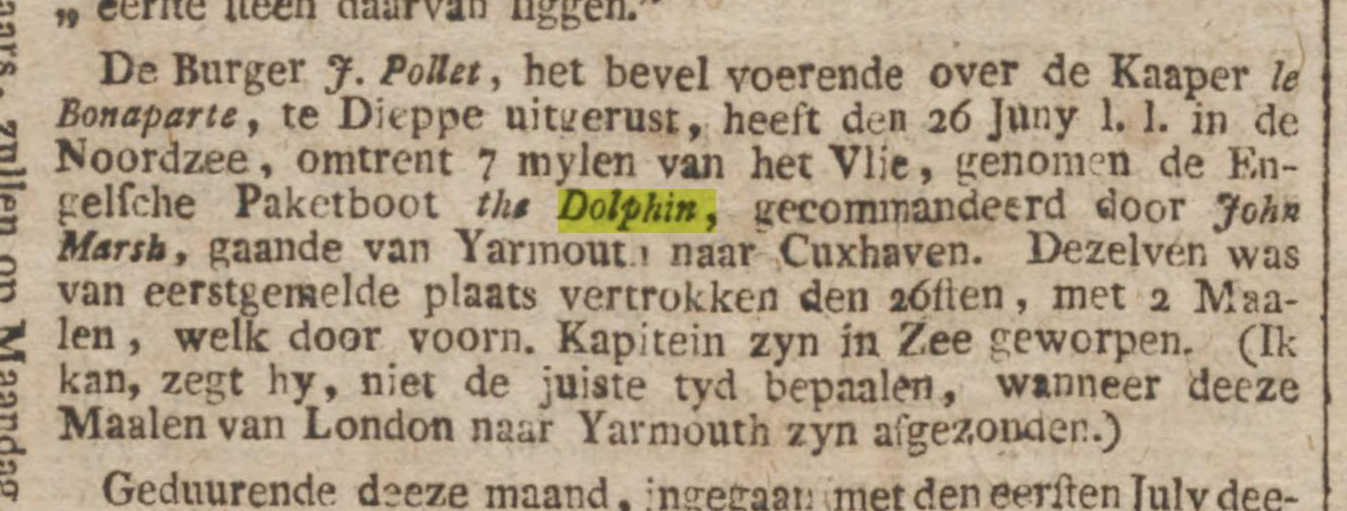
Although all the ship’s mail had been thrown overboard in an effort to protect its secrets, Macintosh’s case made it to Amsterdam. In an effort to get it back, Macintosh contacted the French diplomat Charles-Étienne Coquebert de Montbret, who, though he was able to confirm the existence of the case and its papers, was unable to help; the documents had by then been sent “to some of the ministers of state at Paris”. According to Polly’s memorial, Macintosh made a second attempt two years later, in June 1802, to recover the missing case, but without success.
All of this raises the tantalising possibility that sitting somewhere in an archive in Paris are Macintosh’s missing papers. My initial efforts to investigate this possibility haven’t so far led me anywhere, but I will keep persevering. Given that the Christmas deadline for the submission of my book is hovering unsettlingly on the horizon, however, my completist tendencies might well be stymied by the reality of time.