Monthly Archives: October 2026

From John Street to the Chouannerie front line

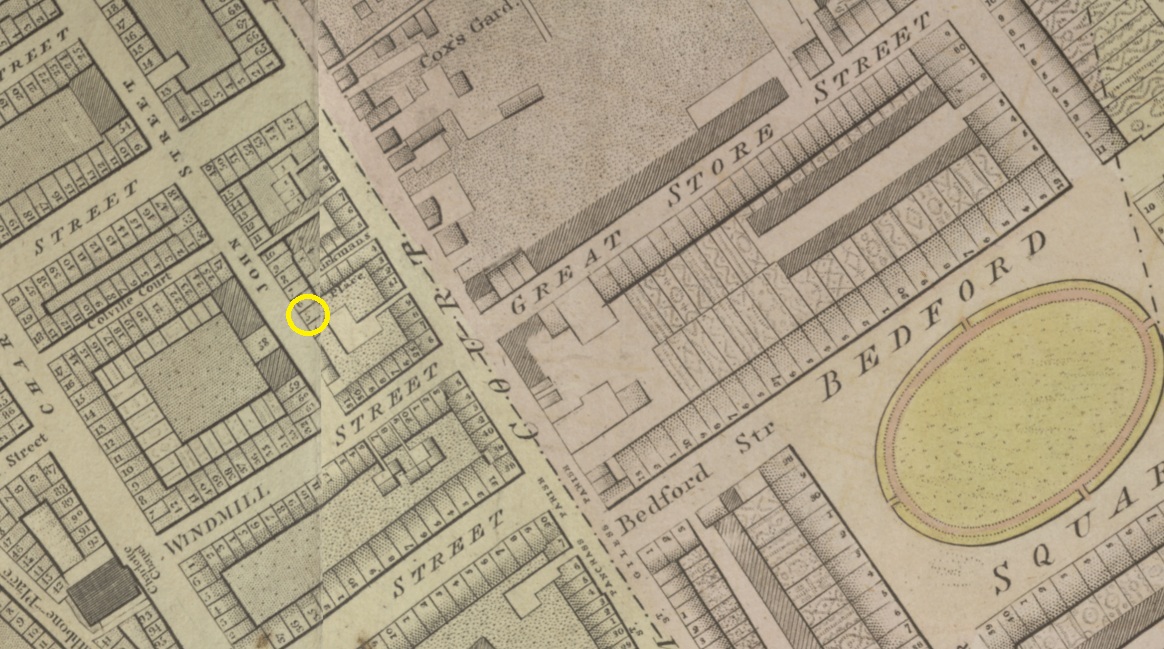
Detail from Richard Horwood’s plan of London and Westminster (1792–99), showing 5 John Street (a stone’s throw from one of my haunts—Royal Holloway’s building at 11 Bedford Square)..

Even at this late stage of research and writing, new pieces of information continue to come to light about Macintosh and his world. The latest came to my only attention yesterday by way of a reader of this blog, who was kind enough to share photographs of a letter sent from Macintosh’s son-in-law, Alexandre-Auguste Le Sueur de Colleville, to Macintosh’s brother, George, in May 1796.

Alexandre was writing from 5 John Steet (now Whitfield Street) to the west of Tottenham Court Road where he was living as an émigré with his wife, Polly, and the couple’s two young children, and possibly also Polly’s mother, Ann (who worshiped at the non-conformist chapel on Tottenham Court Road, after whose preacher, George Whitefield, John Street was later renamed).

In the letter, Alexandre explained that, having been repeatedly urged by Macintosh to join the counter-revolutionary cause, he was preparing to travel to Normandy via Jersey to join the Chouannerie, a royalist insurgency that had begun in 1793. His decision to join the insurgency appears to have been driven at least as much by financial necessity as by political conviction. He and Polly were in straitened circumstances, and Alexandre evidently hoped that, despite the risks, joining the royalist forces in France might offer him a salary or a financial bonus of some kind. As he explained to George Macintosh, this was his “last way of getting something for my family”. “I know very well that the step I am going to take is surrounded by many dangers but my situation demands a desperate remedy.”

Whether Alexandre actually made the journey is not known, but in any event he had left it rather too late. The Chouan uprising was on its last legs and a formal truce was agreed on 6 July.

I am extremely grateful for having been able to see this letter, one of the very few pieces of family correspondence that appear to have survived.
Coming full circle

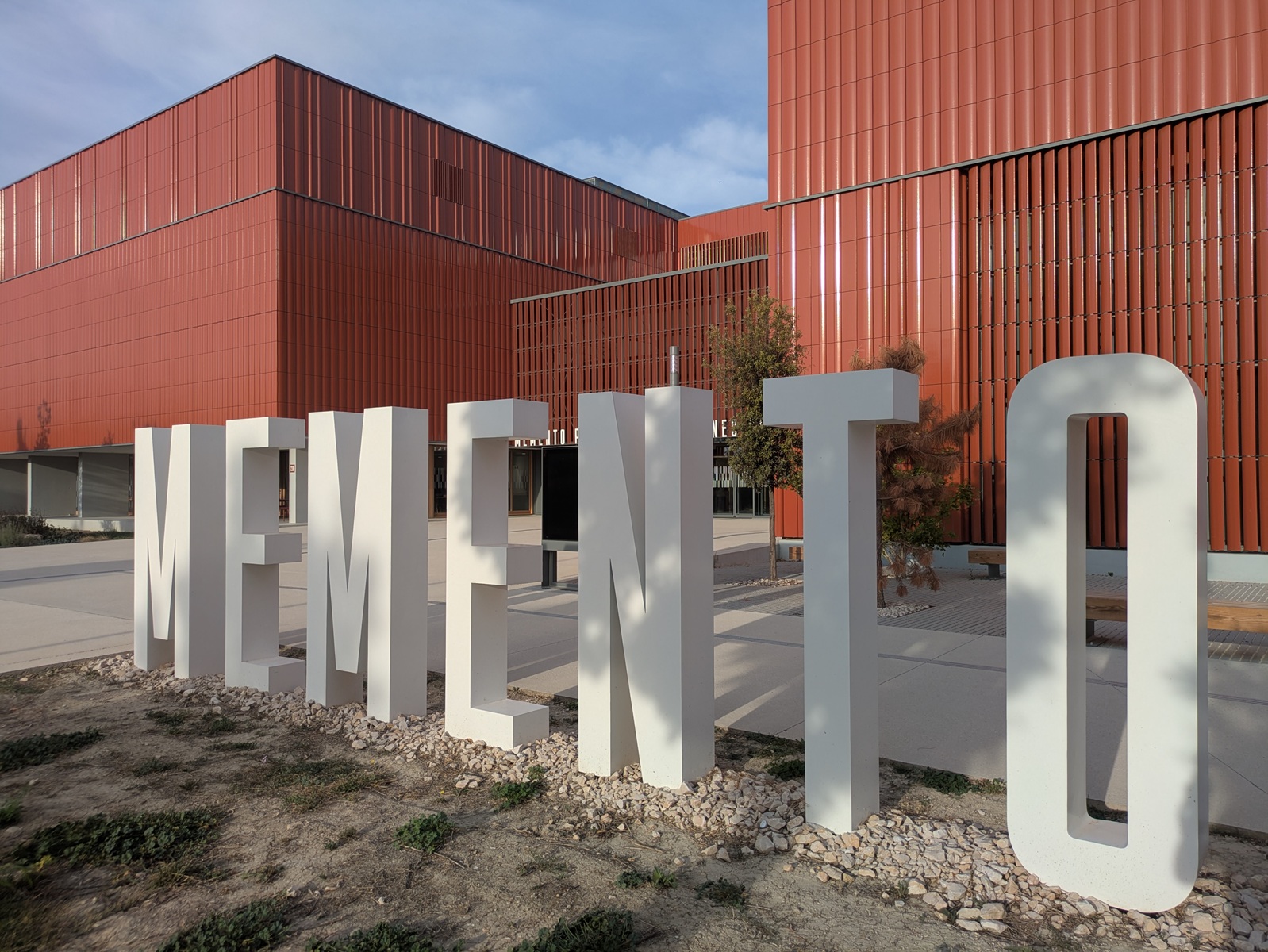
Memento. The new home to the Archives départementales de Vaucluse.

This week I have been back in Avignon in an effort to tie up the final archival loose ends that will allow me to finish the book. It’s a little more than fourteen years since I came here for the first time to scope out Macintosh’s archive. If I had known then that it would take me quite so long to make sense of it all, I may well have thrown in the towel there and then! I’m glad I didn’t know that, I’m glad that I’ve persevered, and that I’m now able to glimpse the finishing line on the horizon.

Although this was a return to a familiar collection, it was, for me, in an entirely new context, since this has been my first visit to the archive’s new home, Memento—a purpose-built facility that opened earlier this year. Although much less romantic than the archive’s old home in the Papal Palace, Memento is a much more practical venue and I certainly found it quicker and easier to order material than in the past. The only slight downside is that Memento is located on the outskirts of town, necessitating a 45-minute bus ride each way if you happen (like me) to be staying in the city centre.

Whether or not it was as a result of the move from the old to the new venue—a massive logistical operation that took the team of archivists many months to plan for and complete—the folders that comprise Macintosh’s archive have been given new and easier-to-cite archival references, meaning it will be more straightforward in the future for those who wish to consult them. For the benefit of anyone who might be interested, the updates references are as follows:

2 E 17  Fonds MAKINSTOSH [sic]

Old coteNew cote
2 E titres de famille 832 E 17/1
2 E Titres de famille 842 E 17/2
2 E Titres de famille 852 E 17/3
2 E Titres de famille 862 E 17/4
2 E Titres de famille 91/12 E 17/5
2 E Titres de famille 91/22 E 17/6

With the possible exception of one or two quick visits to the British Library and the National Archives, this will be my last phase of primary research on this project. I have only 55 working days in which to finish the book: writing, revising, and getting it into shape for submission. This is less time than I would like, and may even be less time than I need, but even the slowest of slow scholarship needs to speed up once in a while.